


How to Be More Masculine Without Losing Yourself
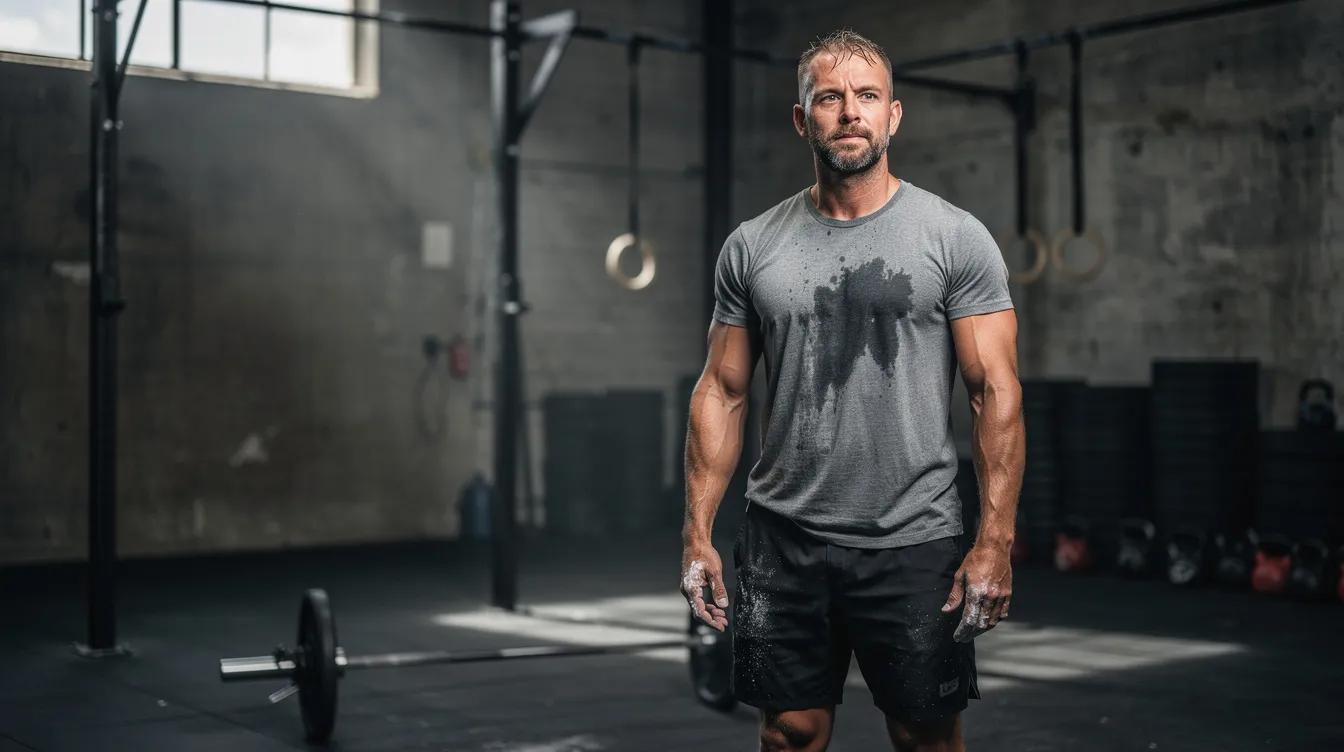
Learn how to be more masculine through disciplined action, emotional control, clear values, and an identity grounded in integrated strength.
Healthy Masculinity: Why Real Strength Begins With Identity
A man can look strong, speak confidently, train hard, and still feel uncertain about who he is.
That is the problem behind most searches for how to be more masculine. The man searching is rarely asking how to become louder, more aggressive, or more dominant. He is trying to understand why something inside him feels uncertain, passive, disconnected, or incomplete.
The internet is waiting with a costume.
Grow a beard. Build muscle. Lower your voice. Stop showing emotion. Dominate the room. Never apologize. Make more money. Become “alpha.”
Some of that advice may change how others perceive you. Very little of it answers the deeper question.
Masculinity is not an image you project. It is an identity you embody when your strength, values, emotions, decisions, and responsibilities begin working together.
Why Men Feel Disconnected From Their Masculinity
Many men have received conflicting instructions about what masculinity means. They have been told to be strong but never intimidating, confident but never forceful, emotionally available but never vulnerable enough to appear weak.
Eventually, some men stop trusting their own instincts. They either suppress qualities that feel naturally masculine or exaggerate them in an attempt to prove something.
This creates two common reactions. One man becomes passive, avoids conflict, abandons his boundaries, and calls it kindness. Another becomes controlling, emotionally unavailable, and aggressive, then calls it strength.
Neither is integrated.
The passive man gives away his authority. The performative man becomes controlled by his need to demonstrate authority. Both are organizing their behavior around external approval rather than an internal standard.
If you want to understand how to be more masculine, start by recognizing that masculinity cannot be built through imitation. It develops when you decide what kind of man you respect—and begin practicing the qualities that make him trustworthy.
Masculine Identity Is Practiced, Not Announced
Identity is not simply what you believe about yourself. It is the pattern your actions repeatedly confirm.
You may describe yourself as disciplined, but your private decisions reveal whether discipline is part of your identity. You may consider yourself courageous, but your response to discomfort, rejection, uncertainty, and necessary conflict tells the truth.
A masculine identity forms through congruence. Your words, values, boundaries, and behavior begin pointing in the same direction.
That does not mean becoming rigid or emotionless. It means becoming dependable enough that your mood no longer determines whether you honor your commitments.
Men often believe they need greater confidence before they can take decisive action. In reality, confidence frequently appears after a man has accumulated evidence that he can trust himself.
You build that evidence by keeping promises when no one is watching, speaking honestly when silence would be easier, and remaining present when discomfort tempts you to retreat.
That is how to be more masculine in a way that cannot be faked. You become someone whose internal word carries weight.
What CrossFit Reveals About Masculinity
CrossFit provides a useful proving ground because intensity removes the luxury of pretending.
When you are deep into a difficult workout, your preferred self-image becomes less important than your actual response. Fatigue reveals whether you can remain composed, adjust intelligently, receive coaching, and continue without allowing your ego to destroy your form.
There is nothing masculine about loading a bar beyond your ability because you need the room to notice you. That is insecurity wearing weightlifting shoes.
There is also nothing admirable about quitting the moment the workout exposes a weakness. The more integrated response is to meet the challenge honestly: use the appropriate load, maintain your position, tolerate discomfort, and complete the work with intention.
This is where physical training becomes more than fitness.
The body exposes patterns the mind can rationalize. Do you pace yourself or become reckless? Do you compare yourself with the man beside you? Can you accept correction without becoming defensive? Do you confuse suffering with progress?
CrossFit does not automatically make a man masculine. It gives him a physical environment where the quality of his discipline becomes visible.
The lesson follows him outside the gym. A masculine man does not need every situation to prove his strength. He needs enough self-awareness to use the right kind of strength for the moment.
Healthy Masculinity Is Integrated Strength
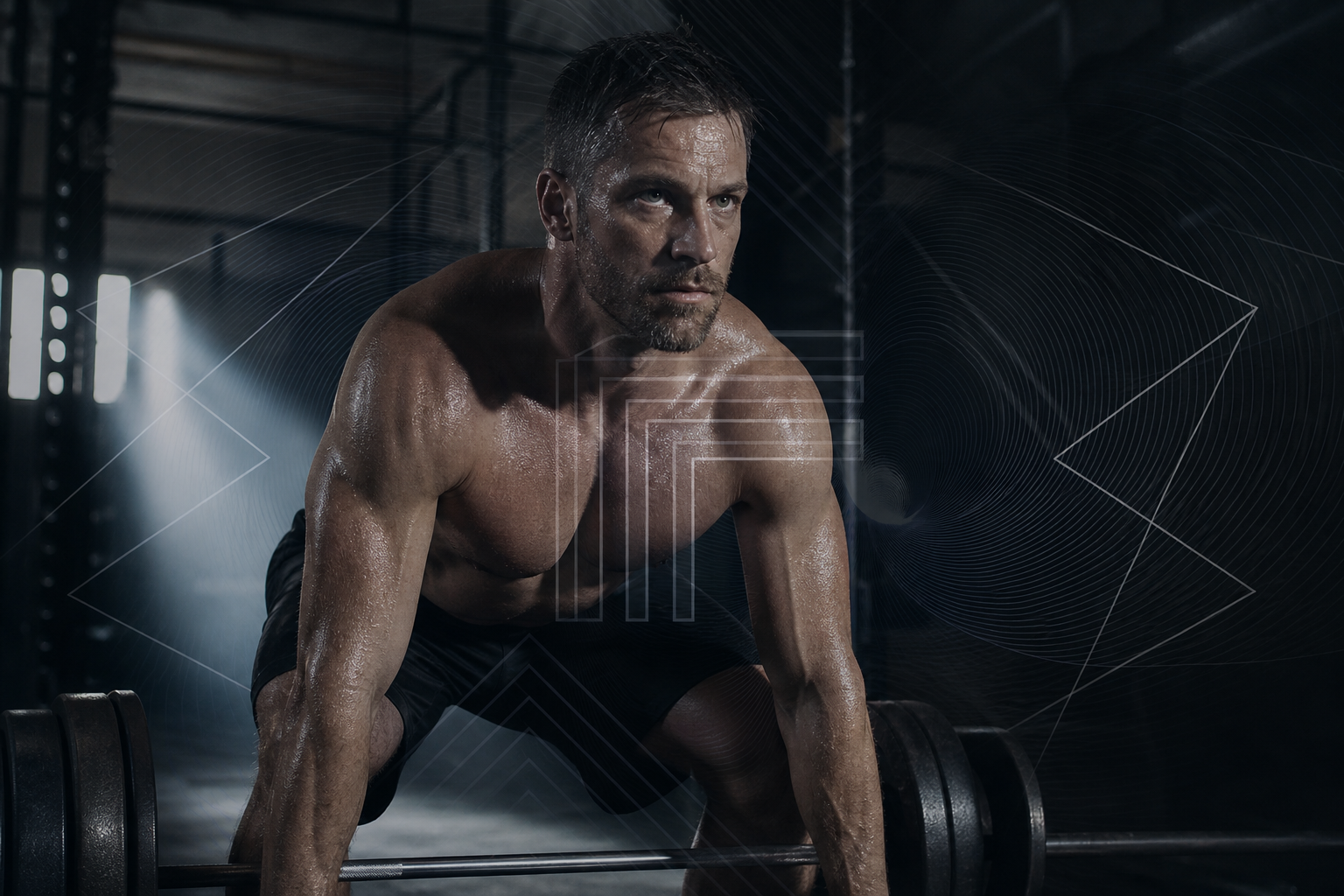
Learning how to be more masculine requires moving beyond the idea that masculinity is simply physical power, emotional toughness, or authority over others.
Healthy masculinity is integrated strength.
Physical strength matters because your body affects your confidence, energy, resilience, and capacity to meet life directly. But physical development without mental clarity can turn training into punishment, competition into obsession, and discipline into another way of avoiding yourself.
Mental clarity matters because strength requires direction. A man who cannot distinguish what matters from what merely demands his attention will exhaust himself trying to respond to everything.
Emotional stability matters because unmanaged emotion controls behavior whether a man admits it or not. Anger, shame, fear, jealousy, and insecurity do not disappear because they are suppressed. They simply begin making decisions from behind the curtain.
Purpose matters because power without direction eventually becomes destructive or empty. A man needs something larger than appearance, status, or applause to determine how his strength will be used.
These dimensions influence one another. When the body, mind, emotions, and purpose become aligned, masculine energy no longer needs to be advertised. Other people experience it through your steadiness, standards, presence, and actions.
Emotional Control Is Not Emotional Suppression
One of the most damaging misconceptions about how to be more masculine is the belief that masculine men should not experience vulnerability, fear, grief, or uncertainty.
Emotional suppression is not control. It is avoidance that often looks controlled until the pressure becomes too great.
A man who refuses to acknowledge fear can still be governed by it. He may avoid the conversation, delay the decision, control the people around him, or attack anything that makes him feel exposed.
Emotional stability means you can experience an emotion without surrendering your authority to it. You can feel anger without becoming cruel, fear without becoming passive, and disappointment without turning it into an identity.
The same principle appears during physical training. You do not pretend the effort does not hurt. You recognize the signal, regulate your response, and decide what the moment requires.
That is strength because it preserves choice.
Masculinity does not require you to disclose every emotion to everyone. It requires you to be honest enough with yourself that unexamined emotions do not control how you lead, love, work, or respond under pressure.
Boundaries Are a Form of Responsibility
Some men try to become more agreeable because they want to be accepted, needed, or viewed as good. They say yes when they mean no, tolerate disrespect, avoid disagreement, and slowly become resentful.
This is not compassion. It is self-abandonment with polite manners.
Understanding how to be more masculine includes learning how to establish clear boundaries without aggression or apology. A boundary communicates what you will participate in, what you will protect, and what consequences you are prepared to uphold.
Healthy boundaries do not control other people. They clarify your own decisions.
A masculine man can hear disappointment without immediately reversing himself. He can consider another person’s needs without making their approval the price of his integrity.
This is where responsibility becomes more precise. Responsibility is not carrying everything, rescuing everyone, or making sure nobody is ever uncomfortable. It is accepting what is genuinely yours while refusing to build an identity around burdens that do not belong to you.
Masculinity and Human Performance
Masculinity becomes especially important when viewed through the lens of human performance.
Human performance is not simply productivity, physical capacity, or the ability to push harder. It is the expression of physical strength, mental clarity, emotional regulation, disciplined behavior, and meaningful direction working as one system.
A man may perform at a high level professionally while becoming increasingly disconnected at home. He may be physically strong while emotionally reactive, financially successful while internally directionless, or relentlessly disciplined while using achievement to outrun insecurity.
That is performance without integration.
Eventually, the fragmented areas begin collecting a cost. Decision-making slows. Relationships become strained. Training stops restoring him. Achievement produces less satisfaction, so he applies more force and assumes the answer is greater discipline.
The problem is not always a lack of performance. Sometimes it is the identity driving the performance.
A man who needs achievement to prove his worth will never experience enough success. A man who uses physical strength to hide emotional insecurity will never feel strong enough. A man who confuses responsibility with self-erasure will eventually resent the life he claims to be protecting.
This is why the question of how to be more masculine cannot be separated from identity. Sustainable human performance emerges when a man is no longer using performance to compensate for who he fears he might be.
Stop Trying to Look Masculine
Performative masculinity is exhausting because it requires constant evidence.
You must appear confident, win every disagreement, know every answer, hide every wound, and remain unaffected by anything that happens. The image becomes another burden you have to carry.
Integrated masculinity feels different. You can admit when you are wrong because being wrong does not erase your identity. You can ask for guidance because another man’s expertise does not diminish your authority.
You can show tenderness without becoming weak and assertiveness without becoming hostile. You can walk away from a pointless confrontation because your strength does not depend on public demonstration.
This is how to be more masculine without becoming a character. You stop asking whether an action looks masculine and start asking whether it reflects courage, discipline, honesty, responsibility, and self-respect.
Build Masculinity Through Deliberate Action
Masculine identity strengthens when it is repeatedly expressed through action.
Train your body, but pay attention to the man doing the training. Notice whether he is developing capacity or punishing himself, testing his limits or chasing validation.
Practice decisive action on matters you already know require attention. Make the call. Set the boundary. Finish the task. Have the conversation you keep rehearsing but avoiding.
Accept responsibility without turning martyrdom into a virtue. Protect what matters, provide where you can, and stop using duty as an excuse to neglect your body, relationships, or internal life.
Tell the truth, especially when a more convenient version would protect your image. Integrity is not merely morality; it is the foundation of self-trust.
Finally, create periods of voluntary difficulty. CrossFit, strength training, hiking, martial arts, and endurance work place you in direct contact with discomfort. Used consciously, they teach you to remain present, regulate your response, and act with intention when the easier choice becomes available.
The goal is not to become harder for the sake of hardness. The goal is to become more integrated under pressure.
How to Be More Masculine Without Losing Yourself
The answer to how to be more masculine is not to construct a new personality. It is to remove the behaviors, fears, and performances preventing your strength from becoming coherent.
You may already possess discipline, courage, ambition, and resilience. The deeper question is whether those qualities are aligned with an identity you respect—or being used to protect an image you are afraid to lose.
Masculinity is not measured by how much space you can dominate. It is revealed in the stability you bring into a space.
It appears in your willingness to act, your ability to remain grounded under pressure, your refusal to abandon your values for approval, and your capacity to use strength without needing to prove it.
You do not become more masculine by trying to convince others that you are a man.
You become more masculine by living in a way that convinces you.
Rebuild Strength From the Inside Out
The Resilient Man Framework is designed for men who are tired of appearing strong while feeling increasingly fragmented beneath the surface.
It will help you identify where pressure, outdated identity, and misdirected discipline may be limiting your resilience and human performance. More importantly, it provides a grounded path for reconnecting physical strength, mental clarity, emotional stability, and purposeful action.
How To Be More Masculine FAQ’s
What does it really mean to be more masculine?
Being more masculine means developing qualities such as courage, discipline, responsibility, emotional stability, decisiveness, and purposeful strength. It does not require dominance, aggression, or suppressing your emotions. A healthy masculine identity allows a man to remain grounded under pressure, protect his boundaries, honor his commitments, and act according to values he has consciously chosen. The goal is not to resemble a cultural stereotype. It is to become increasingly trustworthy to yourself and capable of using your strength constructively.
How can I be more masculine without becoming aggressive?
Aggression and masculinity are not the same. Aggression often comes from insecurity, poor emotional regulation, or the belief that control must be forced. Healthy masculinity allows you to be direct without becoming hostile and assertive without humiliating other people. For example, setting a firm boundary calmly requires more internal control than exploding after months of resentment. You become more masculine by increasing your capacity to act decisively while remaining responsible for the effect of your actions.
Does lifting weights or CrossFit make you more masculine?
Physical training can support masculine development, but it does not automatically create it. CrossFit and strength training build physical capacity while exposing how you respond to discomfort, competition, correction, fatigue, and failure. A man may become stronger while remaining insecure or reckless. The deeper value appears when training develops discipline, humility, resilience, and self-trust. The workout becomes a laboratory where physical challenge creates mental clarity and reveals the identity behind your behavior.
Is emotional vulnerability compatible with masculinity?
Yes. Emotional vulnerability is compatible with masculinity when it reflects honesty rather than uncontrolled disclosure. A masculine man does not need to deny fear, sadness, uncertainty, or disappointment to remain strong. He recognizes what he is experiencing and chooses an appropriate response. Suppression allows hidden emotions to influence behavior without conscious direction. Emotional awareness restores choice, making it possible to communicate honestly, remain present, and respond to pressure without becoming emotionally reactive or disconnected.
What masculine traits should a man develop?
Useful masculine traits include integrity, courage, self-discipline, decisiveness, responsibility, emotional regulation, physical capability, healthy boundaries, and commitment to purpose. These traits should work together rather than exist in isolation. Courage without judgment becomes recklessness, discipline without purpose becomes self-punishment, and responsibility without boundaries becomes self-erasure. Integrated strength means developing these qualities in a way that improves your character, relationships, and human performance—not merely the image you present to other people.
How does masculine identity affect human performance?
Masculine identity influences what drives a man’s effort, how he handles pressure, and whether his performance can be sustained. When performance is driven by insecurity, approval, or the need to prove worth, achievement creates only temporary relief. When identity is grounded in clear values and self-trust, effort becomes more focused and sustainable. Physical strength, mental clarity, emotional stability, and purpose begin reinforcing one another. The result is performance that expresses who the man is rather than compensating for who he fears he is not.
How long does it take to become more masculine?
There is no fixed timeline because masculinity is not a temporary program or appearance change. It develops through repeated choices that build self-trust and reinforce a coherent identity. A man may experience an immediate shift when he tells the truth, establishes a necessary boundary, or completes something he has avoided. Lasting change occurs when those actions become consistent. The process is less about waiting to feel masculine and more about repeatedly practicing courage, discipline, responsibility, and integrity until they become embodied.
