


The Code of Bushido: A Forgotten Path to Self-Mastery in a World Addicted to Noise
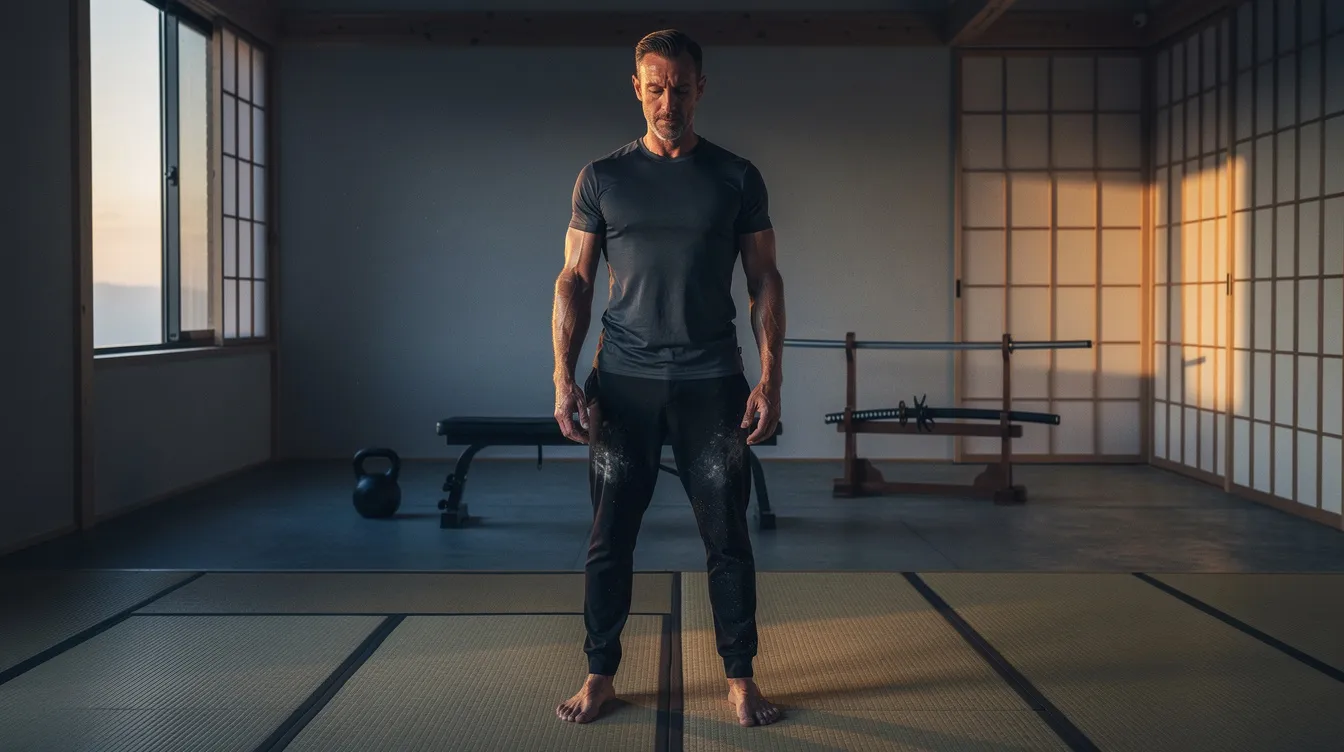
Discover how The code of Bushido can help modern men develop discipline, clarity, courage, and self-mastery in a distracted world.
The Code of Bushido and the Discipline Modern Men Are Missing
You can be disciplined enough to train before sunrise, meet every obligation, and keep pushing when other men stop—yet still feel scattered, reactive, and disconnected from the man you intend to be.
That is the contradiction many high-performing men are living. Their strength is visible and their responsibilities are handled, but their attention is fractured and their decisions are increasingly shaped by pressure rather than principle.
The problem is not information. Most men already have more advice and strategies than they could use. Information cannot decide who you will be when you are tired, threatened, tempted, or under pressure.
A code can.
The code of Bushido offers a different path. It does not promise an easier life or a shortcut to confidence. It gives a man an internal standard—one that can guide his decisions, discipline, conduct, and identity when the noise around him becomes louder than the voice within him.
Bushido Was Never Just About the Sword

Bushido is commonly translated as “the way of the warrior.” Most people hear that phrase and picture swords, armor, duels, and samurai obeying a rigid code of honor. That image contains part of the history, but it can also obscure what makes Bushido useful now.
There was not one universally standardized list of seven rules followed identically by every samurai across every period of Japanese history. Samurai ethics changed across centuries and were influenced by Confucianism, Buddhism, Shinto, feudal relationships, martial traditions, and the demands of different eras. The seven virtues commonly taught today are best understood as an influential modern expression of that broader warrior ethic.
That distinction matters because The code of Bushido should not be treated as historical costume. Its value is not in pretending to be a samurai. Its value is in confronting a question modern life encourages men to avoid:
What governs your behavior when comfort, approval, convenience, and emotion are all pulling you in different directions?
I studied Bujinkan for years, and it changed how I understood martial training. The techniques mattered, but the deeper lesson was how training exposed hesitation, tension, ego, and the urge to force an outcome. The body revealed what the mind could explain away.
That is the physical-to-mental bridge at the heart of the Conscious Warrior: physical challenge creates mental clarity, and mental clarity makes identity refinement possible. The sword was a tool. The real training ground was the self.
Why a Man Without a Code Becomes Reactive
Modern culture celebrates endless options. It sounds like freedom. In practice, it often creates internal chaos.
Without a clear code, every difficult choice becomes a fresh negotiation: whether to train, speak honestly, keep your word, protect recovery, or take the uncomfortable action you know is needed. Eventually, the strongest emotion in the moment becomes the decision-maker.
This is how a capable man becomes reactive without recognizing it. Familiar discipline can hide deeper drift. He may train hard while avoiding a necessary conversation, meet everyone else’s expectations while neglecting his direction, or stay loyal to an identity that no longer fits.
The cost appears as reduced patience, mental crowding, poor recovery, inconsistent follow-through, distance in relationships, and the sense that something is off. A man can keep producing results while becoming less present in the life those results were supposed to support.
The code of Bushido interrupts that drift by replacing constant negotiation with deliberate standards. A personal code does not remove choice. It helps you make choices that remain aligned when pressure makes alignment difficult.
The Seven Virtues of Bushido for Modern Self-Mastery

The seven virtues commonly associated with Bushido become meaningful only when they change behavior. Reading about courage is easy. Acting courageously while your comfort or certainty is at risk is the practice.
Gi: Rectitude
Gi is often translated as rectitude, righteousness, or justice. In modern life, it is the ability to identify what is right and act accordingly without allowing convenience to rewrite the answer.
In training, Gi may mean respecting what your body is reporting instead of forcing a session to protect your ego. Elsewhere, it may mean choosing what serves the mission over what protects your image—or admitting that the way you are operating no longer works.
Rectitude begins when you stop asking, “What can I get away with?” and start asking, “What action is aligned with the man I say I am becoming?”
Yu: Courage
Courage is not the absence of fear. It is the willingness to move toward the right action while fear is present. That distinction separates courage from recklessness.
Physical training gives you repeated opportunities to enter discomfort and regulate your response. But courage must transfer beyond the gym. A man can face a brutal workout and still avoid the conversation, boundary, or personal truth that threatens his identity.
Yu asks you to stop using physical toughness as evidence that no other courage is required.
Jin: Compassion
Compassion can sound soft to a man who has built his identity around strength. That misunderstanding is precisely why Jin matters. Power without compassion becomes force; standards without humanity become punishment.
Compassion does not require weak boundaries. It allows you to understand another person without abandoning your values—and to correct your own failed action without turning it into a verdict on your identity.
Sustainable strength needs that flexibility. A brittle man may look hard, but pressure eventually exposes what cannot bend.
Rei: Respect
Rei is more than politeness. It is disciplined regard for yourself, other people, the environment, and the practice you have entered.
In the gym, respect appears in how you train and recover when no one is impressed. In relationships, it appears in your ability to listen without preparing your defense. Under pressure, it keeps another person’s behavior from determining the quality of your own.
Respect is not submission. It is self-command expressed through conduct.
Makoto: Honesty and Sincerity
Makoto demands more than avoiding obvious lies. It requires congruence between what you say, what you believe, and what you repeatedly do.
A man may say his health matters while treating recovery as optional, claim family comes first while giving them his leftover attention, or want change while protecting every habit that keeps the current pattern alive.
Makoto closes the distance between stated values and observable behavior. It is uncomfortable because it removes the stories that allow misalignment to continue unnoticed.
Meiyo: Honor
Honor is often confused with reputation. Reputation is what other people believe about you. Honor is the standard you maintain when they are not watching.
Meiyo becomes an anchor under pressure because it shifts the question from “How will this look?” to “What choice can I respect after the moment has passed?” You no longer need every action to be seen, praised, or understood.
Honor is the private evidence that your identity is more than a public claim.
Chugi: Loyalty
Traditional loyalty was closely tied to relationships, duty, and service. For the modern man, Chugi requires careful examination because loyalty can either strengthen a life or trap it.
Loyalty to your values, family, mission, and commitments can create stability. Blind loyalty to an outdated role or self-image can create years of unnecessary suffering. Ask whether the object of your loyalty still deserves the life energy you are giving it.
The code of Bushido does not ask you to remain loyal to your limitations. It asks you to live with enough integrity to know what deserves your devotion.
The Mountain Made the Code Real

Several years ago, I was climbing Mt. Rainier when the snow fractured and an avalanche began racing toward me. In that moment, there was no time for a motivational phrase, a productivity hack, or a carefully constructed identity. The mountain stripped the performance away.
When the chaos settled, one realization landed harder than the avalanche: I had spent years building external strength while ignoring internal alignment. The discipline was real, but some of it had become proving. The achievement was real, but it was not producing the connection or direction I expected it to provide.
The avalanche did not hand me a new personality. It exposed the separation between who I believed I was becoming and how I was actually living. It forced me to confront the question at the center of The code of Bushido: Who are you when circumstances remove your ability to control the outcome?
You do not need an avalanche to answer that question. Life provides smaller tests every day. The workout you want to skip, the truth you want to soften, the apology you resist, the boundary you postpone, and the recovery your ego tells you that you have not earned all reveal the code you are already living.
How to Practice The Code of Bushido Without Becoming Rigid
A useful code creates direction while leaving room for intelligence, adaptation, and context. Without that flexibility, discipline becomes another form of self-punishment.
Start with three practices.
Choose One Virtue to Train
Do not attempt to perform all seven virtues at once. Choose the one that exposes your current edge. If you have been avoiding a decision, train Gi. If you know the decision but fear the consequences, train Yu. If your standards have become harsh and brittle, train Jin.
Each morning, identify one situation in which that virtue is likely to be tested. Each evening, review what you actually did. This turns philosophy into observable evidence.
Use the Body as a Feedback System
Physical practice makes internal patterns visible. Notice what happens when a workout becomes uncomfortable, a lift does not go as planned, recovery requires restraint, or progress slows. Do you become reckless, impatient, self-critical, distracted, or tempted to quit?
Do not judge the response; study it. The pattern you rehearse under physical pressure often appears in work, relationships, and personal decisions. Training becomes more than exercise when you use it to refine how you meet difficulty.
Build a Decision Filter
Before a consequential action, pause and ask three questions:
- What is the aligned action?
- Which virtue does this moment require?
- What choice will I respect tomorrow?
This filter is simple enough to use under pressure. More importantly, it prevents urgency from disguising itself as truth.
The Mistakes That Turn a Code Into Another Performance
The first mistake is copying someone else’s rules without examining your own values. The code of Bushido should be a mirror, not a costume. Your personal code must address the real responsibilities and patterns in your life.
The second is confusing rigidity with discipline. A rigid man follows a rule after it stops serving its principle. A disciplined man adapts without abandoning his standard.
The third is using a code to judge everyone else. The moment Bushido becomes proof of your superiority, you have left self-mastery. The code exists to govern your conduct, not evaluate other men.
The final mistake is assuming insight equals embodiment. Knowing the Japanese names or quoting warrior philosophy proves nothing. Your code is visible in your calendar, training, relationships, recovery, boundaries, and decisions.
Your Code Is Already Being Revealed
You are already living by a code. The question is whether you chose it consciously. Your behavior reveals what you value under pressure; your training shows how you meet discomfort; and your recovery reveals whether discipline is building your capacity or consuming it.
The code of Bushido remains relevant because modern men do not suffer from a shortage of options. They suffer from fragmentation. They know many things, pursue many goals, carry many responsibilities, and absorb many voices, yet often lack one internal standard capable of organizing them.
The answer is not to become less ambitious or less disciplined. It is to integrate strength with clarity, courage, compassion, honesty, honor, respect, and worthy loyalty. That is how discipline stops being another demand and becomes an expression of identity.
The world will continue producing noise. A code determines whether that noise enters your decisions.
If your discipline is strong but your mental clarity, recovery, identity, or direction no longer matches it, download the Resilient Man Framework. It will help you identify where your strength has become fragmented and begin rebuilding a more integrated way of training, performing, and living.
Frequently Asked Questions About The Code of Bushido
What does The code of Bushido mean?
The code of Bushido is commonly translated as “the way of the warrior.” It refers broadly to ethical ideals associated with Japan’s samurai traditions, including courage, loyalty, honor, sincerity, respect, benevolence, and right action. It was not one fixed list applied identically across every century. Today, its virtues can serve as standards for conduct when pressure, fear, fatigue, or convenience make aligned behavior difficult.
What are the seven virtues commonly associated with Bushido?
The seven virtues commonly presented today are Gi (rectitude), Yu (courage), Jin (compassion), Rei (respect), Makoto (honesty), Meiyo (honor), and Chugi (loyalty). Sources sometimes translate or organize them differently. The practical point is not memorizing a perfect historical list, but using the virtues to examine how you decide, manage power, treat people, honor commitments, and behave when nobody is watching.
Is Bushido still relevant to modern men?
Yes, when it is applied as a framework for conduct rather than romanticized as samurai mythology. Modern men face distraction, competing expectations, decision fatigue, and pressure to perform. Bushido can reduce reactive living by bringing behavior back into alignment with values. Its usefulness appears in ordinary tests: keeping commitments, speaking honestly, setting boundaries, recovering intelligently, and acting courageously when the right choice is uncomfortable.
Does living by Bushido mean suppressing emotion?
No. Emotional suppression is not self-mastery. A disciplined response recognizes emotion without automatically obeying it. Courage includes fear, compassion requires emotional understanding, and respect depends on regulating impulses. The modern practice of Bushido is not about becoming cold or invulnerable. It is about feeling fully, interpreting accurately, and choosing behavior deliberately.
How can I begin practicing The code of Bushido?
Choose one virtue related to a current challenge. Define one behavior that would express it, identify where it will be tested, and review your actions at day’s end. Practice courage by initiating a postponed conversation, honesty by acknowledging what is not working, or respect by protecting recovery. Begin with observable action. A code becomes real through repetition, not admiration.
Can Bushido improve mental strength and physical performance?
Bushido can support both by giving discomfort and discipline a clearer purpose. Physical training exposes reactions to fatigue, frustration, uncertainty, and failure. The virtues provide a way to interpret and refine those reactions. Courage helps you enter useful discomfort, rectitude helps you distinguish intelligent effort from ego, honesty improves self-assessment, and respect supports recovery. The result is not guaranteed performance. It is a more deliberate relationship with pressure, practice, and identity.
