


Why Your Workouts Stop Working After 40

Discover why workouts stop working after 40 and how recovery, adaptation, and smarter performance strategies restore strength and results.
Why Training Harder After 40 Is Making You Worse
You are still training.
Still disciplined.
Still showing up.
So why do your workouts feel heavier… while your results feel smaller?
Why are your joints tighter, your recovery slower, your motivation flatter, and your body less responsive even though your effort is still high?
This is the point where many men start assuming age is the problem.
It is not.
The real problem is that most men keep training at 45 the same way they trained at 25.
And eventually the body stops cooperating.
That is why workouts stop working after 40 for so many men.
Not because they suddenly became weak.
But because the strategy that once created adaptation now creates exhaustion.
There is a difference.
The hard truth is this:
Most men over 40 are not undertrained.
They are under-recovered, neurologically overloaded, inflamed, hormonally taxed, and trying to solve adaptation problems with more intensity.
That approach works for a while.
Many men eventually realize workouts stop working after 40 when recovery and adaptation are ignored for too long.
Your Body Is Not Betraying You
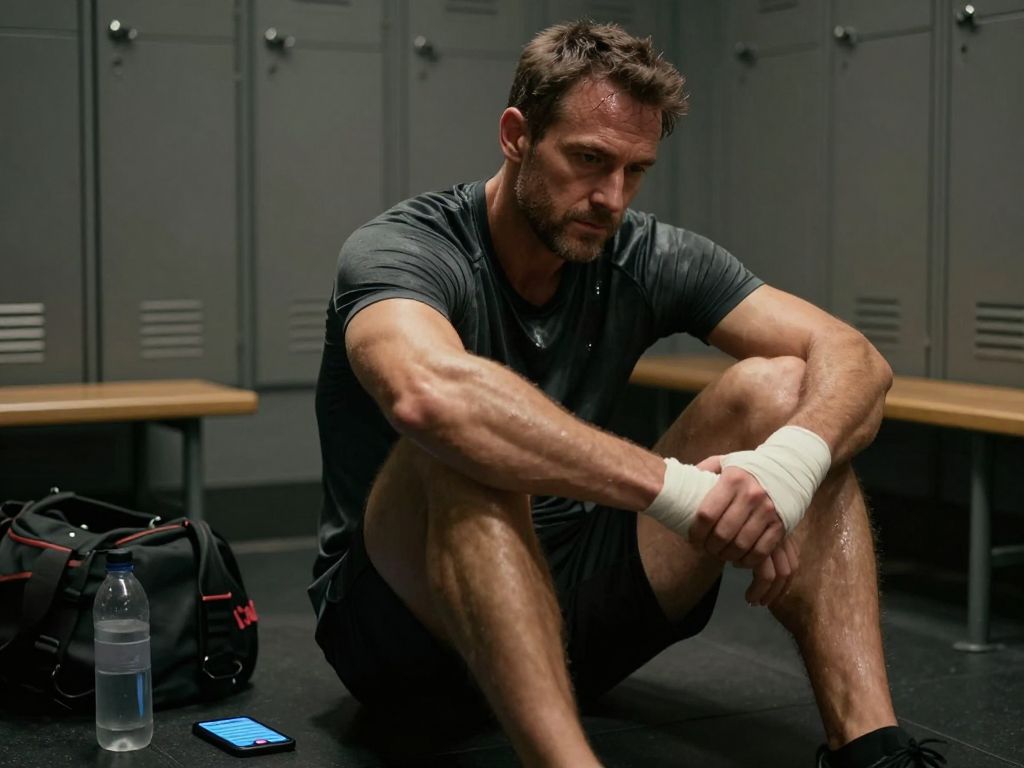
One of the biggest lies in the fitness industry is that your body simply “falls apart” after 40.
That narrative destroys intelligent adaptation.
Yes, things change after 40.
Recovery capacity shifts.
Connective tissue recovery slows.
Hormonal output changes.
Sleep quality becomes more important.
Inflammation accumulates faster.
Stress impacts performance more aggressively.
But that does not mean performance is over.
It means the rules changed.
And if you refuse to adjust your approach, your body eventually forces the adjustment for you.
This is exactly why workouts stop working after 40 for high-performing men who are still highly disciplined.
They keep applying force while ignoring feedback.
The problem is not discipline.
The problem is outdated discipline.
Workouts stop working after 40 when stress, inflammation, and poor recovery start overpowering adaptation.
The Real Performance Decline Most Men Ignore
Most men assume their problem is muscle loss.
Sometimes it is.
But more often, the deeper issue is nervous system fatigue.
Your body is not just muscles and joints.
It is a communication system.
Your nervous system controls:
- recovery
- energy output
- hormonal signaling
- sleep quality
- focus
- resilience
- training adaptation
When stress stays elevated for too long, your body stops responding the same way.
This is where recovery after 40 becomes radically different than recovery in your 20s.
You can no longer:
- sleep 5 hours
- crush stimulants
- train at maximum intensity daily
- ignore inflammation
- neglect mobility
- carry constant stress
…and expect elite adaptation.
Your body keeps score.
And eventually it starts charging interest.
That is why many men experience fatigue after 40 workouts even when they are still “doing everything right.”
The training itself may not be wrong.
But the recovery equation is incomplete.
One overlooked reason workouts stop working after 40 is that connective tissue recovery slows significantly.
The CrossFit Lesson That Changed Everything
Years ago, I believed intensity solved almost everything.
More work.
More volume.
More grind.
More suffering.
And to be fair, that mindset built a tremendous amount of resilience.
CrossFit taught me discipline under pressure.
It taught me how to function under fatigue.
It taught me how to push when things became uncomfortable.
But eventually I started noticing something.
My recovery was slowing down.
My joints stayed irritated longer.
My nervous system felt compressed.
Sleep quality mattered more.
I could still force performance… but the cost kept increasing.
That was the shift.
I realized intensity and adaptation are not the same thing.
You can still dominate workouts while quietly degrading recovery.
You can still look disciplined while your body is losing its ability to repair efficiently.
That realization completely changed how I approached fitness after 40.
I stopped asking:
“How hard can I push?”
And started asking:
“How well can I adapt?”
That single shift changes everything.
Why Workouts Stop Working After 40
There are several physiological reasons why workouts stop working after 40.
And no, it is not because your best years are behind you.
It is because your body requires a more intelligent recovery and adaptation strategy.
1. Recovery Debt Accumulates Faster
In your 20s, you could often recover despite poor habits.
After 40, the margin for error shrinks.
Lack of sleep, chronic stress, poor nutrition, alcohol, inflammation, and excessive training volume all accumulate faster.
This creates recovery debt.
And when recovery debt rises, performance drops.
2. Connective Tissue Recovery Slows
Your muscles may feel capable.
But tendons, ligaments, and connective tissue recover slower with age.
That is why overtraining after 40 often shows up as:
- chronic soreness
- nagging injuries
- joint stiffness
- tendon irritation
- reduced explosiveness
Most men try to solve this by training harder.
That usually makes it worse.
3. Stress Becomes More Expensive
Hormones and exercise after 40 are deeply connected.
High stress impacts:
- cortisol
- testosterone balance
- sleep quality
- recovery capacity
- inflammation
- nervous system output
Many men are not just physically fatigued.
They are neurologically overloaded.
Business pressure.
Responsibility.
Financial stress.
Family obligations.
Constant stimulation.
Then they attempt to outwork the exhaustion inside the gym.
That strategy eventually collapses.
4. Your Training No Longer Matches Your Season
This may be the biggest reason workouts stop working after 40.
You are trying to train like a younger version of yourself instead of the current version of yourself.
That does not mean becoming soft.
It means becoming strategic.
The goal is no longer random exhaustion.
The goal is sustainable adaptation.
What Smarter Training Looks Like When Workouts Stop Working After 40
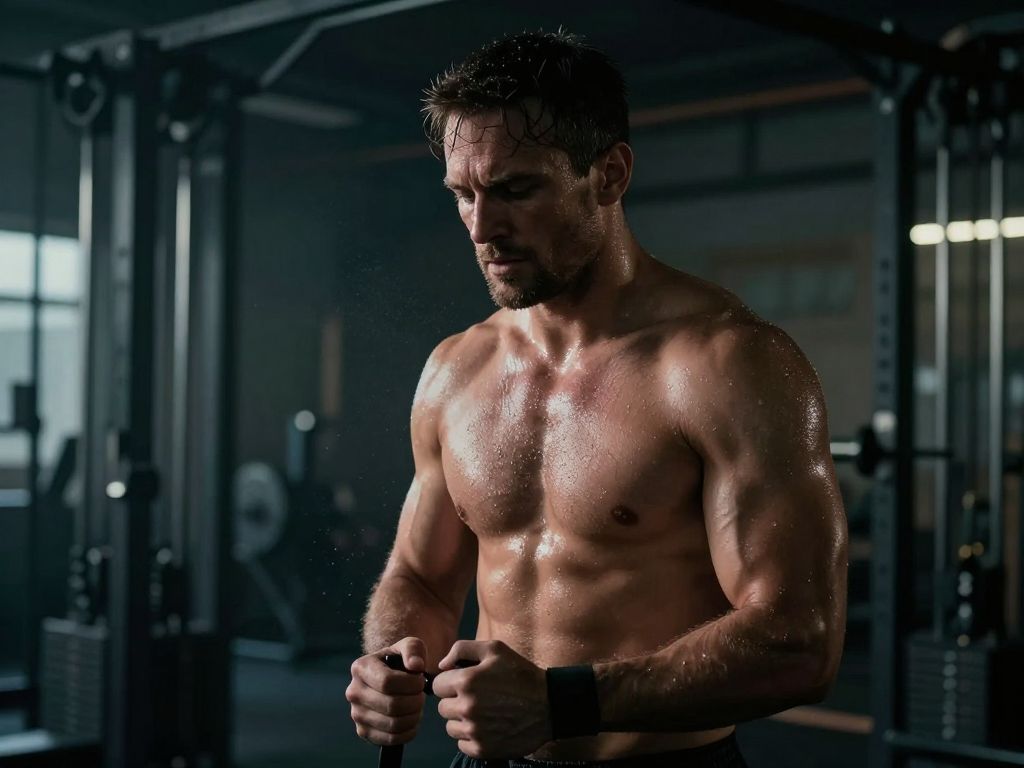
The answer is not stopping hard training.
The answer is removing unnecessary punishment.
Men who perform well after 40 usually become better at:
- managing nervous system load
- improving sleep quality
- programming recovery intentionally
- cycling intensity
- protecting connective tissue
- reducing inflammation
- supporting hormonal balance
- prioritizing mobility and tissue health
- training with precision instead of ego
This is where training adaptation becomes critical.
Your body still wants to perform.
But it now demands cooperation instead of domination.
That is a completely different relationship with fitness.
Where Peptides Enter the Conversation
This is also where intelligent peptide support can become valuable.
Not as a shortcut.
Not as magic.
And definitely not as an excuse for terrible habits.
But as part of a broader recovery and performance strategy.
This matters because many men searching for why workouts stop working after 40 are actually dealing with:
- connective tissue stress
- recovery limitations
- accumulated inflammation
- poor sleep quality
- slower tissue repair
- chronic training fatigue
Certain peptides are often explored specifically because they may support recovery and tissue repair processes.
For example:
BPC-157
BPC-157 is commonly discussed in performance and recovery circles for its potential role in:
- connective tissue support
- recovery optimization
- injury recovery
- gut health support
- tissue repair processes
TB500
TB500 is often explored for:
- recovery support
- mobility support
- tissue recovery
- inflammation management
- training longevity
Again, these are not replacements for:
- sleep
- intelligent programming
- nutrition
- stress management
- recovery discipline
But when integrated correctly, many high-performing men use them as part of a broader strategy focused on training longevity and performance restoration.
That distinction matters.
Because mature performance is no longer about crushing yourself.
It is about maintaining capacity.
The Identity Shift Most Men Resist

The hardest part about fitness after 40 is rarely physical.
It is psychological.
Most men attach their identity to the version of themselves that could survive endless punishment.
So when the body begins demanding adaptation, they interpret it as weakness.
It is not weakness.
It is evolution.
Your body is asking for intelligence.
Not surrender.
This is where many men get stuck.
They continue chasing exhaustion because exhaustion feels familiar.
But adaptation requires awareness.
And awareness forces you to confront an uncomfortable truth:
More effort is not always more effective.
Sometimes the most disciplined thing you can do is stop training like a man trying to prove something.
And start training like a man trying to preserve power for the next 30 years.
The New Standard for Performance After 40
The men who perform best after 40 usually stop obsessing over punishment.
Instead, they focus on:
- sustainable strength
- recovery efficiency
- hormonal support
- nervous system regulation
- movement quality
- sleep optimization
- inflammation management
- consistency without self-destruction
That is real longevity.
And ironically, it often produces better results than the high-stress training style they relied on earlier in life.
This is the real answer to why workouts stop working after 40.
Your body is not asking you to quit.
It is asking you to evolve.
If your body feels older than your discipline, recovery—not motivation—is probably the missing variable.
That is exactly why I created the Resilient Man Framework.
Because most men do not need more motivation.
They need a better recovery strategy, a smarter performance system, and a more sustainable relationship with strength.
And for some men, that may also include deeper conversations around recovery optimization tools, peptide support, training adaptation, and performance longevity.
You can learn more about the Resilient Man Framework and explore the recovery tools that support long-term performance without destroying your body in the process.
Frequently Asked Questions About Workouts Stop Working After 40
Why do workouts stop working after 40?
Workouts stop working after 40 because recovery capacity, hormonal balance, nervous system resilience, and connective tissue recovery all begin changing with age. Most men continue using the same training intensity and recovery habits they used in their 20s, which eventually creates fatigue, inflammation, and reduced adaptation instead of progress. The issue is usually not lack of discipline. It is outdated recovery and training strategies.
Is overtraining after 40 more dangerous?
Yes. Overtraining after 40 can create more noticeable recovery problems because connective tissue heals slower, stress accumulates faster, and nervous system fatigue becomes more impactful. Many men ignore these signs because they still mentally feel capable of pushing hard. But accumulated fatigue often shows up as sleep disruption, stalled performance, chronic soreness, irritability, and recurring injuries.
How important is recovery after 40?
Recovery after 40 becomes one of the most important variables for performance. Sleep quality, stress management, inflammation control, mobility work, nutrition, and nervous system regulation all directly influence training adaptation. Many men continue increasing intensity while ignoring recovery, which eventually causes workouts to feel harder while results decline.
Can peptides help with muscle recovery after 40?
Some men explore peptides such as BPC-157 and TB500 as part of a broader recovery and performance strategy. These peptides are often discussed for their potential support related to tissue repair, connective tissue recovery, inflammation management, and training longevity. However, peptides should never replace intelligent programming, quality sleep, proper nutrition, or recovery discipline.
What are the benefits of coaching for men over 40?
Coaching helps men over 40 stop guessing and start training strategically. Many high-performing men unknowingly push themselves into chronic fatigue because they continue applying outdated methods. Effective coaching helps identify recovery gaps, stress overload, nervous system fatigue, programming mistakes, and lifestyle factors that are limiting performance. It also creates accountability, structure, and a sustainable long-term performance strategy.
