


Advanced Fitness for Men Over 50: The 12-Week Strength & Longevity Blueprint

Discover advanced fitness for men over 50 with this 12-week strength and longevity program designed for experienced lifters to build muscle, protect joints, and maintain peak performance
Most Fitness Advice for Men Over 50 Is Wrong…
If you’ve been training for decades, you already know what effort feels like. You’ve built strength, pushed through plateaus, and probably relied on discipline to carry you forward. But now something has shifted. Recovery is slower, joints are louder, and the same programs that once worked now feel like they’re working against you.
Here’s the truth most people won’t say: advanced fitness for men over 50 is not about doing less—it’s about doing what actually works for your body now.
Most advice misses the mark. You’re either told to “take it easy” or to keep pushing like you’re still 25. Neither approach respects your experience or your physiology. Advanced fitness for men over 50 requires a smarter, more strategic system—one that balances intensity, variation, recovery, and power.
The Evolution of Training After 40+ Years
After more than four decades of lifting, performance training, and pushing physical limits, one thing becomes clear: what built your body will not maintain it. At some point, effort alone stops working.
There was a time when more volume, more intensity, and more frequency delivered results. But over time, that approach leads to wear and tear, joint irritation, and stagnation. The breakthrough comes when you shift your focus from pushing harder to training smarter.
Advanced fitness for men over 50 is about sustainability. It’s about building a system that allows you to stay strong, capable, and resilient for decades—not just for the next few weeks.
The Real Principles Behind Advanced Fitness for Men Over 50

To train effectively at this stage, you need to understand what actually drives results.
Strength is maintained through intensity, not excessive volume. Research on trained lifters consistently shows that moderate volume paired with relatively heavy loading is the most efficient way to preserve strength.
Power becomes critical. Advanced fitness for men over 50 must include intent to move weight explosively. Power declines faster than strength, and maintaining it is essential for long-term function.
Fatigue must be managed. Grinding reps and chasing failure no longer produce better results—they produce setbacks. Studies on velocity-based training show that limiting fatigue within a set improves outcomes while reducing stress on the body.
Variation protects the body. Advanced fitness for men over 50 requires rotating movements to reduce joint stress while maintaining the same movement patterns.
The 12-Week Blueprint for Advanced Fitness for Men Over 50
This system is built around three phases designed to cycle stress, intensity, and recovery.
| Phase | Weeks | Focus | Load (%1RM) | Outcome |
|---|---|---|---|---|
| Foundation | 1–4 | Tissue prep & efficiency | 65–75% | Restore capacity |
| Accumulation | 5–8 | Strength + hypertrophy | 70–82% | Build strength |
| Intensification | 9–11 | Power + neural output | 80–87% | Peak performance |
| Deload | 12 | Recovery | 60–65% | Reset system |
This structure reflects how advanced fitness for men over 50 should be approached: not randomly, but with intention and progression.
How the Program Works in Practice
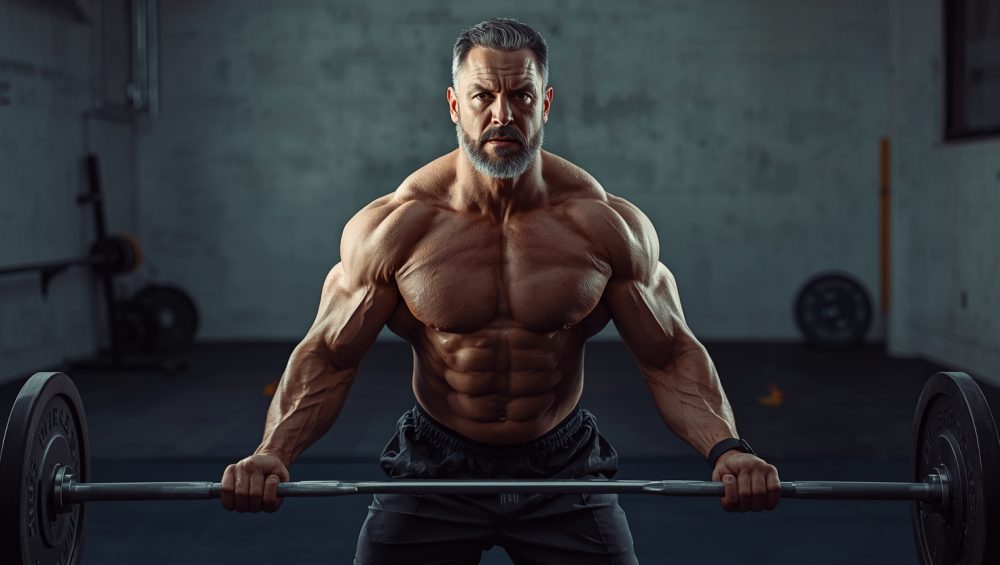
The weekly structure balances frequency and recovery while maintaining performance:
- Day 1: Lower (Quad focus)
- Day 2: Push (Chest, shoulders, triceps)
- Day 3: Pull (Back, biceps, deadlift)
- Day 4: Active recovery
- Day 5: Lower (Posterior chain)
- Day 6: Optional density work
Within this structure, exercises rotate every four weeks to support continued progress. Advanced fitness for men over 50 thrives on this balance between consistency and variation.
Phase 1: Rebuild and Prepare
The first phase focuses on restoring movement quality and preparing connective tissue. Loads are moderate, tempo is controlled, and the goal is to re-establish efficient patterns.
Exercises such as safety bar squats, incline dumbbell presses, and trap bar deadlifts reduce joint stress while maintaining effectiveness. Push-ups are included as controlled volume work, reinforcing stability and providing additional stimulus without excessive strain.
This phase sets the foundation for everything that follows. Without it, advanced fitness for men over 50 becomes unsustainable.
Phase 2: Build Strength Without Breaking Down
In the second phase, intensity increases and the focus shifts toward productive strength training. High-bar squats, incline barbell presses, and conventional deadlifts introduce heavier loading while maintaining control.
Push-ups remain part of the program, now functioning as a hypertrophy tool that complements heavier pressing work. Volume is still moderate, but the quality of each set becomes more important.
This is where advanced fitness for men over 50 delivers the most noticeable progress—strength improves, muscle is maintained, and fatigue is kept in check.
Phase 3: Train Power and Precision
The final phase shifts toward neural efficiency and power. The goal is not exhaustion—it’s performance.
Front squats, heavy dumbbell pressing, and Romanian deadlifts emphasize force production and control. Volume decreases slightly while intensity increases. Push-ups can now be used either as controlled work or as an explosive movement to reinforce power.
Advanced fitness for men over 50 depends heavily on this phase because it preserves the ability to generate force quickly, which is essential for long-term functionality.
Why Push-Ups Matter More Than You Think
Push-ups are often overlooked, but in advanced fitness for men over 50, they serve a critical role. They provide additional pressing volume without the joint stress associated with heavy barbell work.
They also reinforce shoulder stability, improve control, and can be adapted across phases—from slow, controlled reps to more explosive variations.
Used correctly, push-ups become one of the most effective and sustainable tools in your program.
Conditioning and Longevity
Strength training alone is not enough. Advanced fitness for men over 50 must include cardiovascular work to support recovery and overall health.
Zone 2 cardio performed two to three times per week improves recovery and energy systems. High-intensity work is used sparingly to maintain conditioning without excessive fatigue.
Additional movements such as carries, sled work, and mobility training enhance resilience and support long-term performance.
The Bigger Picture
Most experienced lifters don’t struggle because they lack discipline. They struggle because they continue using strategies that no longer serve them.
Advanced fitness for men over 50 is about evolution. It’s about aligning your training with your current physiology while maintaining the intensity and focus that built your foundation.
Resilient Man Framework
If you’re ready to stop guessing and start training with a system built for longevity, strength, and resilience, download the Resilient Man Framework.
This isn’t another generic fitness guide. It’s a structured blueprint designed specifically for experienced men who want to maintain performance, protect their bodies, and continue operating at a high level for decades.
Inside, you’ll uncover the principles, strategies, and mindset shifts required to build strength that lasts.
Frequently Asked Questions
Is it too late to build muscle after 50?
No. Advanced fitness for men over 50 still allows for muscle growth when training is structured correctly. The difference is that recovery and stimulus must be more precise. For example, focusing on high-quality sets rather than excessive volume leads to better results. While progress may be slower, it is still very achievable with the right approach.
How often should men over 50 train?
Most experienced individuals benefit from training four to six days per week. Advanced fitness for men over 50 works best when frequency is balanced with recovery. A structured split allows consistent training while avoiding excessive fatigue accumulation.
Should older men lift heavy?
Yes, but intelligently. Advanced fitness for men over 50 relies on lifting in the 70–85% range of your one-rep max to maintain strength. The key difference is avoiding failure and maintaining control and bar speed throughout each set.
Why is power training important after 50?
Power declines faster than strength, making it essential to train intentionally. Advanced fitness for men over 50 includes explosive intent during lifts to preserve neural efficiency. This translates directly into better performance and long-term physical capability.
Do I need direct arm training?
Yes. Advanced lifters often require direct biceps and triceps work because compound lifts are no longer sufficient. Advanced fitness for men over 50 includes targeted arm work to support both muscle maintenance and joint health.
How important is mindset and coaching?
It is critical. Advanced fitness for men over 50 is as much mental as it is physical. Having a clear plan, accountability, and proper guidance ensures consistent progress and prevents emotional decision-making in training.
