


Strength Training for Longevity After 50
Strength training for longevity after 50 isn’t about staying comfortable. It’s about lifting heavy, preserving power, and refusing quiet physical decline.
The quiet shift after 50
There is a subtle shift that happens to many men after fifty. The language softens. The edge dulls just slightly. What used to be called training hard becomes “being smart,” and what used to be strength becomes “staying in shape.” Strength training for longevity starts to sound less like a commitment to power and more like an insurance policy against aging.
That is where the fracture begins.
Most men say they are training for longevity, but if you listen closely, they are often training to avoid decline. The sessions become careful. The loads become lighter. The effort becomes predictable. It all sounds reasonable on the surface, yet underneath it sits a quiet fear of physical erosion — a fear that heavy lifting might reveal something they do not want to see.
Training for longevity vs training to avoid decline
Strength training for longevity is not about negotiating with time. It is about maintaining physical authority in spite of it. There is a difference between intelligent programming and comfortable programming. One respects progression and recovery. The other quietly removes intensity so you never have to confront whether you are still capable of moving real weight.
If your workouts no longer demand adaptation, they are not protecting your future. They are preserving your comfort.
Longevity built on comfort is fragile. Longevity built on strength is durable.
The 3:45am standard
At 3:45am, when most of the world is asleep, I am not thinking about “staying in shape.” I am thinking about load tolerance. I am thinking about whether my nervous system can still organize under pressure. I am thinking about whether my body responds to challenge with structure or hesitation.
Strength training for longevity asks a direct question: can you still produce force when it matters?
The bar does not care about your age. It responds to tension, intent, and disciplined execution. When you lift heavy with control, you are not chasing ego. You are preserving the neurological connection between brain and muscle that defines capability. When that connection weakens, decline accelerates. When it is trained deliberately, longevity becomes a byproduct of strength rather than caution.
Heavy lifting and joint health
Many men over fifty reduce load under the banner of joint safety. Joint health matters, but joints are strengthened by intelligent stress, not by avoidance. Bone density, connective tissue resilience, and hormonal stability respond to meaningful load. Remove meaningful load from strength training for longevity and you remove the stimulus that protects you.
This does not mean reckless lifting. It means progressive, disciplined exposure to heavy weight relative to your capacity. It means respecting technique while refusing to drift into mediocrity under the disguise of prudence.
Identity-level strength
Strength training for longevity is not just physical. It is psychological. A man who once defined himself by performance may unconsciously soften his training because he does not want to risk discovering he has lost something. Lifting lighter feels safer. There is no threat to his internal narrative.
But identity-level strength is forged through evidence. When you approach a heavy set after fifty and execute it with control, you are not proving youth. You are proving capacity. You are reinforcing the identity of a man who still adapts.
If your training no longer challenges your identity, it is no longer strengthening you.
Physical load tolerance is the bridge
Muscle is not cosmetic at this stage of life. It is metabolic armor. It protects against insulin resistance, frailty, and loss of independence. Strength training for longevity preserves muscle mass, supports metabolic health, and reinforces structural integrity. Your body adapts to what you demand of it.
Heavy lifting signals to your biology that performance is still required. Without that signal, systems down-regulate. With it, systems maintain capacity.
Load tolerance becomes the bridge between who you were and who you are becoming.
Organized intensity and the nervous system
There is a nervous system component that rarely gets discussed. When you step under a challenging bar, your system organizes. Focus sharpens. Breath stabilizes. Noise fades. That state of organized intensity transfers into business, family, and decision-making.
Men who continue strength training for longevity at meaningful intensity maintain a different relationship with pressure. They are not overwhelmed by demand because they repeatedly expose themselves to it in controlled environments.
Strength is transferable.
The fear of physical decline
The fear of physical decline is natural. Ignoring it does not make you wise. Managing it with lighter workouts does not eliminate it. Confronting it through disciplined heavy lifting transforms it.
Strength training for longevity does not turn back the clock. It ensures the clock does not dictate your output. The question is not whether you will age. The question is whether you will age with capacity or caution.
If you are over fifty and lifting only to “stay in shape,” it is worth asking whether that standard reflects who you are — or who you are afraid of becoming.
Strength training for longevity is a standard
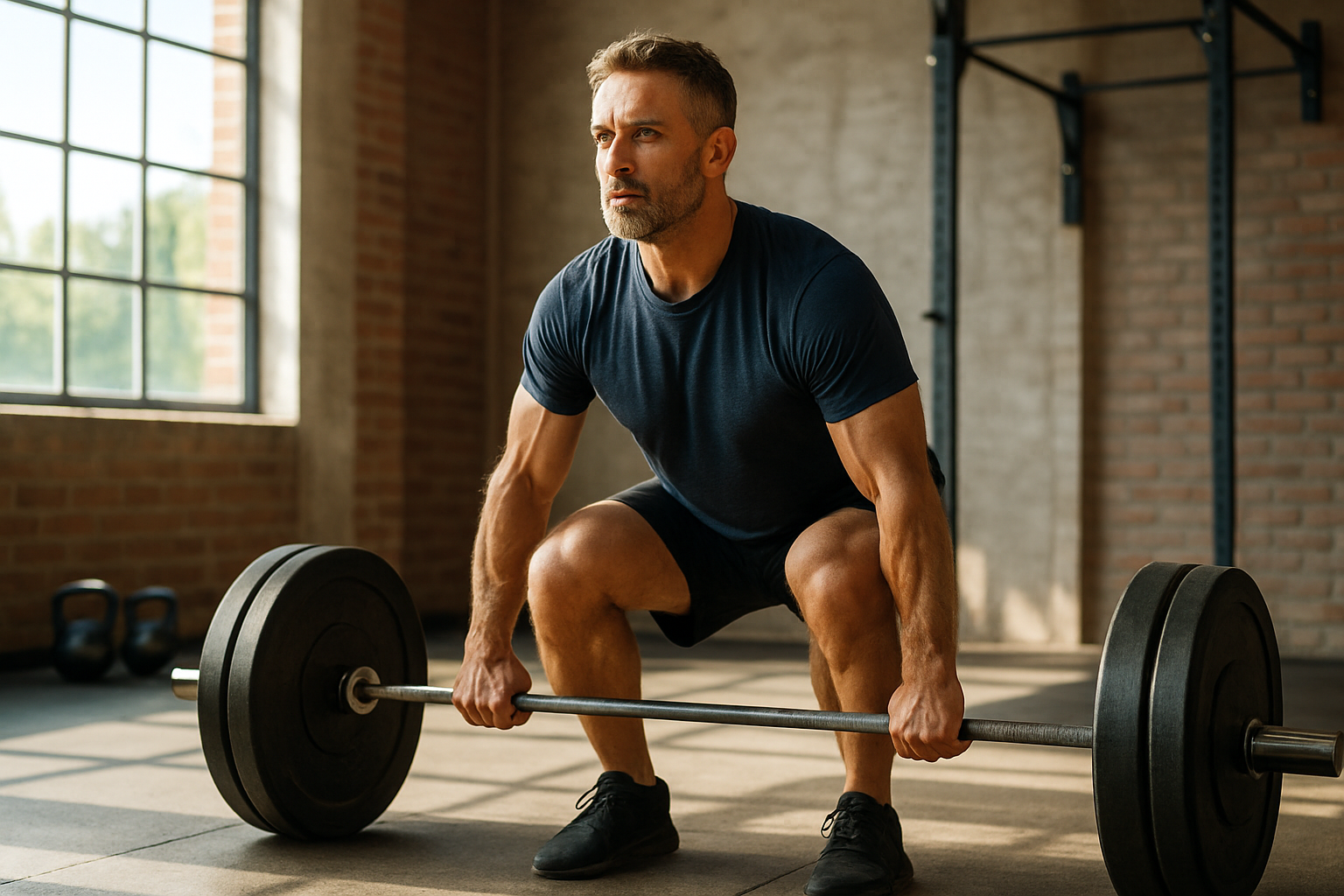
Longevity is not achieved by shrinking ambition. It is achieved by aligning your training with adaptation. That does not require ego lifting. It requires progressive overload, disciplined recovery, and refusal to drift.
The bar is an honest mirror. It will show you where you stand. The only variable you control is whether you continue stepping under it with intent.
If this conversation feels uncomfortably accurate, that is the point. You do not need softer workouts. You need stronger standards.
If you are ready to build a structure that preserves both physical load tolerance and identity-level strength, step into the Alpha Blueprint. It is not hype. It is disciplined progression, integrated strength, and refusal to decline quietly.
Frequently asked questions
Is strength training for longevity safe after 50?
Yes, strength training for longevity is safe after 50 when it is programmed intelligently and progressed gradually. Safety does not come from avoiding load; it comes from respecting technique, recovery, and controlled intensity. For example, progressive strength work improves bone density and connective tissue resilience, which tends to reduce injury risk over time. The nuance is that heavy does not mean reckless — it means challenging relative to your capacity.
Should men over 50 still lift heavy weights?
Yes, men over 50 should lift heavy weights relative to their ability because heavy lifting preserves muscle mass, metabolic health, and neurological coordination. “Heavy” is contextual; it means loads that demand focus and force production, not ego-driven max attempts. For example, controlled compound lifts in lower rep ranges stimulate adaptation more effectively than constant light circuits. The nuance is intelligent progression, not avoidance of intensity.
How many times per week should I do strength training for longevity?
Most men over 50 benefit from 2–4 strength sessions per week depending on recovery capacity, sleep, and overall stress. Two sessions can maintain strength; three to four can build it when programmed well. For example, a full-body approach three days per week allows meaningful load exposure while respecting recovery. The nuance is that adaptation matters more than frequency — if you are not progressing, something must adjust.
What rep range is best for strength training for longevity?
A mix works best, but lower-rep heavy work must remain part of strength training for longevity because it preserves high-threshold motor unit recruitment. Sets in the 3–6 range for primary lifts, supported by moderate accessory work, maintain both force production and tissue durability. For example, pairing heavy compound movements with moderate-volume assistance work creates strength without unnecessary joint stress. The nuance is technical precision and progression, not chasing fatigue.
What are the benefits of coaching for strength training for longevity?
Coaching removes blind spots and ensures strength training for longevity remains progressive rather than comfortable. A coach can identify where you unconsciously reduce intensity, where technique leaks under load, and where recovery is mismanaged. For example, many men believe they are pushing hard, yet repeat familiar weights without structured progression; coaching restores objective standards and accountability. The deeper benefit is identity reinforcement — training stops being random effort and becomes disciplined evolution.
